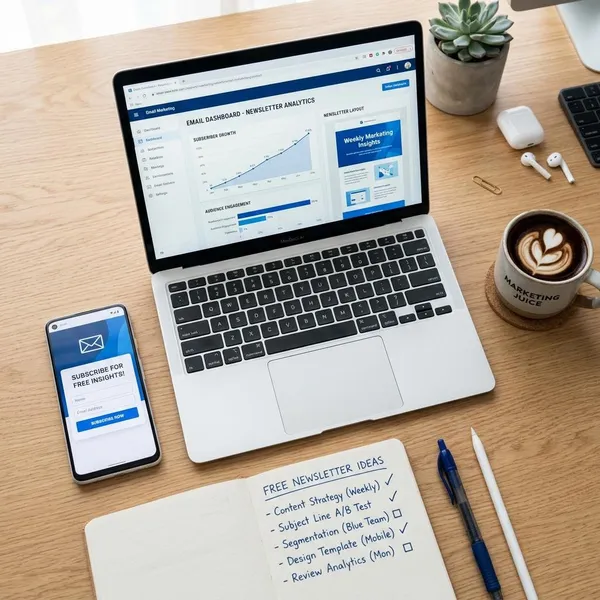
The strongest LinkedIn newsletter best practices are simple: make the promise obvious, publish on a cadence you can actually keep, and give readers one useful reason to come back each time. If you are deciding where to improve first, start with the topic promise and the structure of each edition before worrying about small formatting details.

How to structure each edition
A good LinkedIn newsletter edition should feel easy to enter and easy to finish. Most readers are not sitting down for a long research session; they are checking LinkedIn between tasks, from an email alert, or after seeing a post in the feed.
Write a clear headline
Your headline has one job: help the right reader decide quickly whether the edition is worth opening. Specific usually beats clever on LinkedIn, especially when the audience is busy and professional.
- Weak: Content Magic for Modern Brands
- Stronger: How B2B Teams Can Turn One Webinar Into 10 LinkedIn Posts
- Weak: Thoughts on Hiring
- Stronger: 5 Hiring Signals Founders Miss Before Their First Sales Hire
Open with the main value
Do not spend the first few lines explaining why the topic matters in general. Lead with the insight, mistake, result, or decision the reader came for.
Use short, scannable sections
Short sections make your newsletter feel lighter without making it shallow. Use subheads for each idea, keep most paragraphs brief, and turn steps or comparisons into lists when that helps the reader move faster.
- State the problem or takeaway in the opening.
- Explain two to four supporting points.
- Add one example, visual, or lesson.
- Close with one action or question.
Add useful examples or visuals
Examples stop your advice from sounding generic. A short before-and-after headline, a screenshot with one annotation, or a simple workflow diagram can often explain the point faster than another paragraph.
Use visuals when they reduce effort for the reader. A chart comparing three content tests is helpful; a decorative stock image usually is not. If you show a process, make the visual carry a clear lesson rather than just filling space.
End with one clear CTA
Choose one call to action that matches the edition. Ask readers to comment with their experience, share it with a teammate, read a related resource, or subscribe for the next issue.
Best LinkedIn newsletter content
The best LinkedIn newsletter content gives readers something they can use at work: a sharper decision, a better process, a useful trend interpretation, or a lesson they can apply. Pure announcements and broad thought leadership tend to fade quickly unless the audience already has a strong reason to care.
Practical how-to content
How-to editions work well because they promise a clear outcome. They are especially useful for marketers, founders, consultants, recruiters, sales teams, and operators who want a process they can test immediately.
For a solo consultant, a practical edition might show how to turn one client question into a post, a newsletter issue, and a sales conversation. For a larger marketing team, the same idea may need an approval workflow and a clearer content owner.
Industry insights and analysis
Industry updates become valuable when you add interpretation. Readers can find news anywhere; they subscribe because they want to know what the change means for their role, team, or strategy.
Case studies and lessons
Case studies do not need to be dramatic to be useful. A small campaign improvement, a hiring lesson, a failed launch, or a workflow change can make a strong edition if the lesson is specific.
Keep the structure simple: starting point, action taken, result, and what you would repeat or avoid next time. When you have a number, use it. When you do not, be honest and focus on the decision lesson instead of stretching the claim.
Expert opinions and stories
Opinion works best when it is earned. A strong point of view should come with reasoning, a concrete observation, or a short story that makes the lesson easier to remember.
The story should serve the reader, not just the author. A missed opportunity can become a warning. A tough client conversation can become a positioning lesson. A strategic pivot can show when a popular tactic is not the right fit.
Curated trends and resources
Curated editions are useful when they save readers time and add judgment. Do not just list links; explain why each resource matters, who should read it, and what to ignore.
How often to publish
The best publishing cadence is the one you can maintain without lowering the quality of the newsletter. Consistency matters more than ambition, because missed issues quietly train readers not to expect much from you.
Choose the cadence based on the speed of your topic and your real production capacity. A fast news-focused newsletter may need weekly publishing, while a deeper strategy newsletter can work better monthly.
Weekly for frequent updates
Weekly publishing makes sense when your topic changes quickly or when you already have source material from posts, webinars, podcasts, research, or client work. It keeps you visible and gives you more chances to test headlines and topics.
The risk is burnout. If every issue starts from a blank page, weekly publishing can become rushed and repetitive. Use this cadence only if you can plan at least a few editions ahead or repurpose strong ideas without lowering the standard.
Biweekly for steady publishing
Biweekly is often the safest choice for solo creators, consultants, and small teams. It keeps the newsletter active without forcing you to publish before the idea is ready.
This cadence works well for practical breakdowns, interviews, short case studies, and thoughtful trend analysis. It gives you enough time to collect examples and still appear consistently in your audience's feed and inbox.
Monthly for deeper editions
Monthly publishing can work when each edition has more depth, synthesis, or original insight. It is a good fit for leadership commentary, industry roundups, research-led content, or company newsletters with longer review cycles.
How to grow newsletter subscribers
Subscriber growth comes from two things working together: people need to see the newsletter, and they need to understand why subscribing is worth it. Visibility without a clear promise brings weak followers; a strong promise without promotion grows slowly.
Promote editions in LinkedIn posts
Publishing the edition is not enough. Create a separate LinkedIn post that gives people a reason to click, especially those who missed the notification or are not subscribed yet.
Do not just write, "New newsletter is live." Pull out one useful insight, one mistake, one chart, or one short excerpt. A good promotion post should stand on its own while making the full edition feel worth opening.
Share the newsletter outside LinkedIn
Use the places where your audience already sees you. Add the newsletter link to your email signature, mention it on your website, include it in relevant blog posts, or share selected editions in communities where the topic fits.
- Email signature: useful for consultants, agencies, and sales teams with regular client contact.
- Website or blog: helpful when search visitors match the same audience.
- Other social channels: best when you rewrite the teaser for that platform instead of copying the LinkedIn post.
Collaborate with relevant experts
Collaboration can grow subscribers when the guest, quote, or partner genuinely improves the edition. A relevant expert brings credibility and may introduce the newsletter to an audience that already cares about the topic.
Keep the fit tight. A big-name guest with the wrong audience may create a short spike but little lasting engagement. A smaller expert with the exact right audience can be more valuable.
Encourage readers to share
Ask for sharing in a specific, low-pressure way. "Send this to a teammate planning next quarter's content" is easier to act on than "Please share."
Keep delivering a clear content promise
A newsletter grows more easily when readers can describe it in one sentence. For example, "biweekly LinkedIn content experiments for B2B marketers" is much stronger than "ideas about marketing and growth."

LinkedIn newsletter metrics to track
Track metrics that help you make better editorial decisions, not just the numbers that look impressive. LinkedIn analytics can be more limited than a dedicated email platform, so look for patterns across several editions instead of overreacting to one result.
Subscriber growth
Subscriber growth shows whether your positioning and promotion are working. Watch what happens after specific topics, collaborations, or stronger promotional posts.
A steady increase from the right audience is usually better than a one-time spike from a broad post. If subscribers rise but engagement drops, your promotion may be attracting people who are not well matched to the newsletter promise.
Article views
Article views help you compare topics, headlines, and publishing times. They are useful as a directional signal, especially when several editions on the same theme perform well.
Do not treat views as proof that the content worked. A strong headline can attract clicks while the edition itself produces few comments, reactions, or link clicks. Pair views with engagement before deciding what to repeat.
Email open rate
Email open rate, when available in your analytics, can show whether the headline and topic looked relevant enough from the inbox. A drop may point to vague titles, topic drift, or reader fatigue.
Use it as an early signal, not the final score. Opens tell you people were interested enough to enter; comments, reactions, and clicks tell you more about whether the edition delivered.
Reactions and comments
Reactions and comments show whether the edition sparked a response. Comments are especially useful because they reveal what readers found helpful, confusing, debatable, or worth applying.
Link engagement
Link engagement matters when your newsletter supports a website, webinar, lead magnet, product page, or community. Use trackable links where possible so you can see whether readers took the next step.
The destination should feel like a natural continuation of the edition. A relevant checklist, case study, or event page usually performs better than a generic homepage link because the reader already understands why it matters.
Conclusion
A LinkedIn newsletter grows when readers know exactly what they will get and you keep proving that promise with useful editions. Start with a narrow topic, choose a cadence you can sustain, make each issue easy to scan, and improve based on the metrics that show real interest rather than surface-level reach.