Livestreaming e commerce in China works because the sale happens while the shopper is still watching, asking questions, and reacting to an offer. The strongest streams do not just "show products"; they combine entertainment, proof, trust, discounts, and in-app checkout so the buyer has fewer reasons to leave and think about it later.
Why Is Livestream Shopping So Popular in China?
Livestream shopping fits habits that are already normal in China's mobile internet: short video, social interaction, fast payments, recommendation feeds, and rapid delivery expectations. The format works best when it answers one practical shopper question quickly: "Can I trust this enough to buy now?"
Entertainment keeps shoppers watching
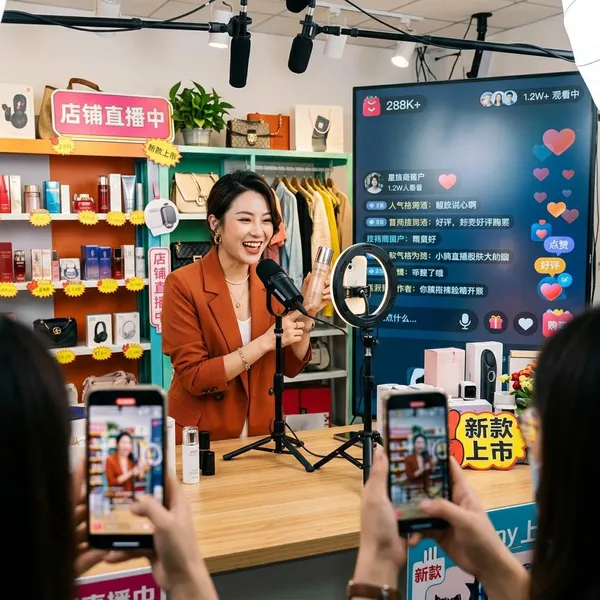
A good livestream feels closer to a live show than a product page. The host keeps the pace moving, reacts to comments, compares items, jokes with viewers, and creates small moments that make people stay longer than they planned.
Live demos reduce product uncertainty
Live demos are useful because they show the parts that product photos often hide: texture, size, color under lighting, fit, packaging, or how a tool actually works. This is why categories such as beauty, fashion, snacks, kitchen tools, and household goods are common in Chinese livestreams.
- Beauty: viewers can see shade, finish, and application.
- Food: hosts can show portion size, packaging, and taste reactions.
- Home goods: demonstrations make function easier to judge.
- Fashion: fit and fabric movement are easier to understand on camera.
Real-time answers build confidence
Comments turn hesitation into a direct question. A viewer can ask whether a jacket runs small, whether a skincare product suits dry skin, whether a device includes accessories, or when the order will ship.
The key is timing. If the answer arrives while the shopper is still interested, the purchase path stays warm. If the viewer has to leave the app, search reviews, or message customer service separately, the chance of buying usually drops.
Limited offers create urgency
Stream-only coupons, bundles, gifts, and low-stock reminders give shoppers a reason to act during the broadcast rather than save the product for later. Urgency works especially well when the viewer already understands the product and only needs a final push.
In-app checkout shortens the buying process
The shorter the path from interest to payment, the less time the shopper has to cool off. In China's major live commerce apps, viewers can tap a product card, apply a coupon, pay, and track delivery without leaving the platform.
For low-risk purchases such as snacks or small household items, this can lead to quick impulse orders. For higher-consideration products, the same smooth checkout helps only if the stream has already answered the buyer's main doubts.
Recommendation feeds drive product discovery
Recommendation feeds push livestreams to users based on signals such as watch time, clicks, comments, purchases, and category interest. That means shoppers do not always begin with a search query; the platform can bring products to them while they are browsing content.
How Does China's Live Commerce Model Work?
The live commerce model is a connected sales loop: the platform brings traffic, the host builds interest, viewers interact, offers push the purchase, and merchants fulfill the order. The part many outsiders underestimate is the preparation behind the stream: inventory, customer service, product sequencing, scripts, and data review.
Platforms send traffic to the livestream
Traffic can come from recommendation feeds, store pages, search, campaign placements, notifications, creator followers, or paid promotion. Without relevant traffic, even a polished stream will struggle; with the wrong traffic, the room may look busy but convert poorly.
Hosts introduce and demonstrate products
The host's job is to translate product features into a buying decision. A strong host explains who the product is for, what problem it solves, what to compare it with, and why the current offer is worth considering.
- For a new brand: clarity and trust matter more than speed.
- For a known product: price, bundle value, and availability may carry more weight.
- For a technical item: the host needs enough product knowledge to avoid vague claims.
Viewers compare, comment, and ask questions
Viewers make the stream more useful by forcing the host to deal with real objections. They ask for close-ups, color comparisons, size advice, ingredient details, shipping timing, and whether a deal is better than the normal store price.
Offers and product links drive purchases
Product cards usually appear when the host has built enough interest. The offer may be a lower livestream price, a coupon, a gift, a bundle, or a limited allocation. The best streams make the purchase trigger feel like a natural next step, not a random interruption.
Brands should be careful with discount depth. A one-off clearance stream can tolerate lower margins, but a long-term live commerce strategy needs repeatable pricing that does not train customers to wait only for heavy discounts.
Merchants handle delivery and returns
Once the order is placed, the merchant has to deliver on the promise made during the stream. Stock accuracy, packing speed, customer service, and return handling all affect whether the buyer comes back.
Brands use viewer data to improve later streams
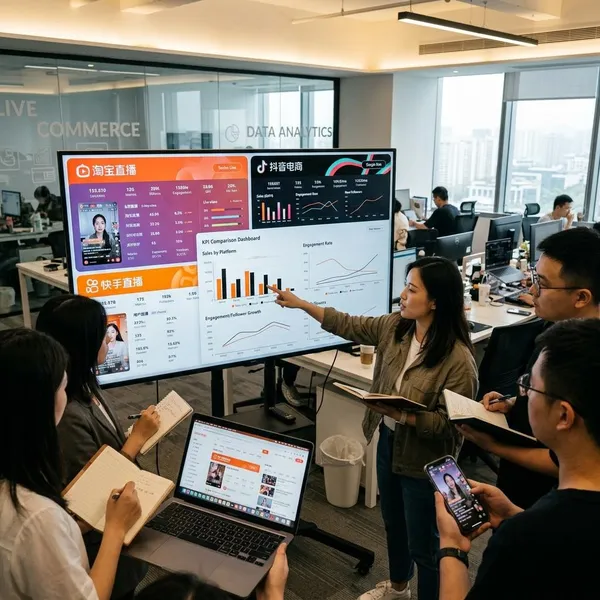
After the stream, useful data is not just total sales. Brands should look at where viewers entered, when they left, which product cards got clicks, which questions repeated, and where conversion dropped.
If many viewers ask about sizing, the next stream needs better fit demonstrations. If clicks are high but purchases are low, the issue may be price, trust, shipping, or product positioning. This feedback loop is one reason live commerce in China can become very systematic after a few sessions.
Which Live Commerce Platform Fits Each Goal?
Taobao Live, Douyin E-Commerce, and Kuaishou E-Commerce all support livestream sales, but they do not behave the same way. The first choice should not be "which platform is biggest?" but "where does this product's buying decision make the most sense?"
| Platform | Best fit | Watch out for |
|---|---|---|
| Taobao Live | Shoppers already close to buying | Requires strong store operations and competitive offers |
| Douyin E-Commerce | Discovery through entertaining content | Weak hooks disappear quickly in the feed |
| Kuaishou E-Commerce | Community trust and repeat buying | Creator-audience fit matters more than glossy production |
How Does the Live Commerce Model Make Money?
Money flows through several layers at once: platforms monetize traffic and transactions, hosts monetize attention and conversion, MCNs monetize talent operations, merchants trade margin for sales, and service firms support the execution. This is why live commerce in China is not just a marketing tactic; it is a full commercial ecosystem.
Platforms earn from ads, commissions, and services
Platforms can earn from paid traffic, campaign placements, transaction commissions, merchant tools, analytics, payment services, and other operating services. The more merchants compete for visibility, the more valuable the platform's traffic and data become.
Hosts earn appearance fees and sales commissions
Hosts may charge a fixed fee, take a commission on sales, or use a mixed model. Big-name hosts can bring immediate attention, but their cost and audience fit need careful checking.
MCNs earn from talent and stream operations
MCNs help manage the machinery behind livestream selling. They may recruit hosts, train presenters, negotiate brand deals, plan scripts, operate studios, moderate comments, and review performance.
Their value is consistency. A brand running one experimental stream may handle more in-house, but a brand planning regular campaigns often needs a team that can repeat the process without rebuilding everything each time.
Merchants trade margin for traffic and sales
Merchants often accept lower margins during livestreams because discounts, bundles, free gifts, commissions, and traffic costs reduce profit per order. The trade can still make sense if the stream clears inventory, brings new customers, or increases repeat purchase.
Service firms earn from production and fulfillment
Service firms make money by handling production, studio setup, script support, moderation, customer service, fulfillment coordination, reporting, and sometimes cross-border operations. Foreign brands often rely on these partners because language, platform rules, local expectations, and logistics can be difficult to manage from outside China.
Outsourcing is not automatically safer, though. Brands should still check who owns the store operation, who handles customer complaints, how product claims are approved, and what happens if order volume jumps suddenly.
Conclusion
China's live commerce model works best when the product, platform, host, offer, and fulfillment all support the same buying decision. Taobao Live is usually stronger for shoppers already near purchase, Douyin for discovery, and Kuaishou for trust-based community sales. The safest lesson for brands is to check platform fit and operational readiness before chasing traffic, because a crowded livestream is only useful if it can turn attention into satisfied buyers.