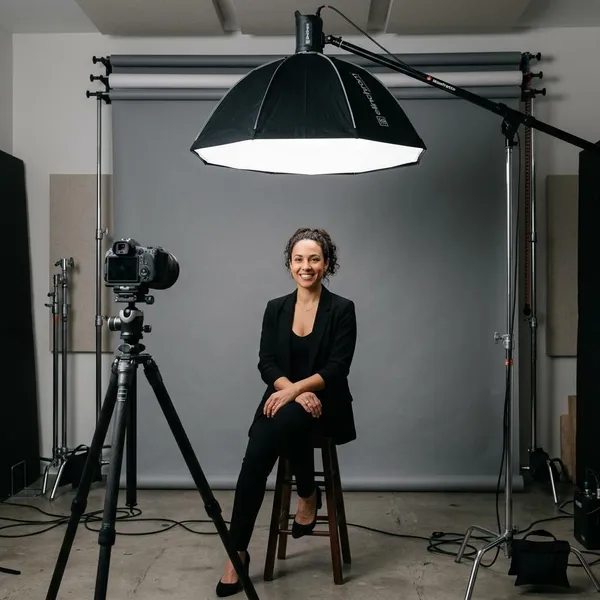
Butterfly lighting works when the key light is centered in front of the face, raised above eye level, and angled down until it creates a small shadow under the nose. If that shadow is neat, centered, and not touching the upper lip, you are close. From there, the real choices are how soft you want the shadows, how much fill to add, and whether the look should feel clean, glamorous, or more dramatic.
How to set up butterfly lighting
Start with placement, not gear. A small flash in the right position will teach you more than an expensive modifier placed too low or too far to one side. The order that matters most is simple: center the light, raise it, angle it down, then judge the shadow under the nose.
Place the light in front
Place the key light directly in front of the subject, close to the lens line. It does not have to be physically attached to the camera, but it should feel centered from the subject's point of view. If one cheek is clearly brighter than the other, the light has drifted into loop or Rembrandt territory.
For beauty work and clean headshots, this centered setup is usually the safest starting point. It gives you symmetry first, then leaves room to add character with posing, expression, background, or contrast.
Raise it above eye level
The light should sit above the eyes, often a little above forehead height, so it travels downward across the face. Too low, and the portrait can look flat or slightly unnatural. Too high, and the eyes may go dull while the nose and chin shadows become heavy.
- Deep-set eyes: lower the light slightly or use more fill.
- Very smooth beauty look: keep the light high enough for shape, but use a softer modifier.
- Sharper glamour look: raise the light a touch, then watch the nose shadow carefully.
Angle it downward
A moderate downward angle is usually enough. Many portraits land somewhere around a gentle 30 to 45-degree tilt, but the exact number matters less than the face in front of you. If the shadow under the nose stretches toward the lip, ease the angle or lower the light.
Center the subject
Ask the subject to keep their nose mostly pointed toward the camera. A small chin drop can define the jawline, and a tiny head tilt can still work, but a strong turn will break the classic centered pattern.
Check the nose shadow
The nose shadow is your quickest quality check. Look for a small, centered shadow directly below the nose, with a little separation before the upper lip. If it joins the lip, the light is probably too high or too steep. If it slides sideways, either the light or the face is no longer centered.
Adjust height and distance
Once the basic pattern is visible, adjust the feel of the portrait. Moving the light closer makes it appear larger and usually softens the skin. Moving it farther away gives firmer shadow edges and stronger contrast.
Change only one thing at a time: height, distance, or modifier position. That habit is less exciting than moving everything around, but it makes the setup repeatable, especially if you need several headshots to match.
Best gear for butterfly lighting
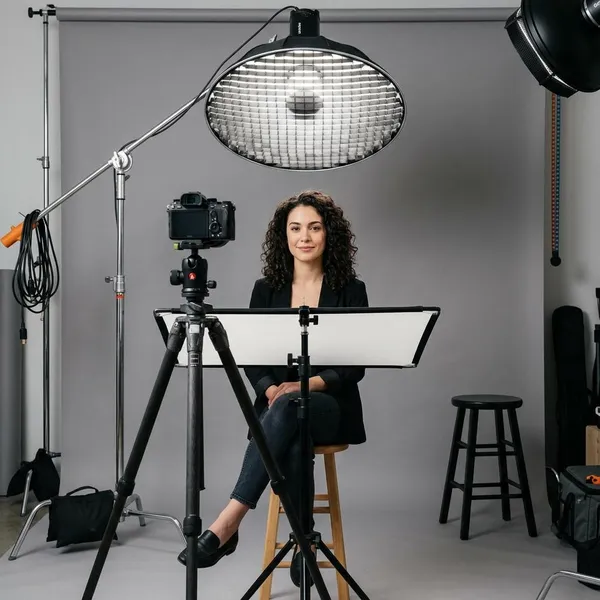
You can create this look with one light, but the modifier decides how forgiving the portrait feels. If you are practicing at home, a speedlight, small softbox, and reflector are enough. If you shoot paid beauty or headshot sessions often, a stronger strobe and a stable stand will make the setup easier to control.
Strobes and speedlights
Use a strobe when you want power, consistency, and room for larger modifiers. It is the better choice for longer portrait sessions, lower ISO settings, and setups where you need the light placed high without struggling for output.
A speedlight is still a good learning tool. In a small room with one person, it can create a clean butterfly pattern inside a compact softbox or umbrella. The limit shows up when you need more power, faster recycle times, or a larger modifier.
Softboxes
A softbox is the easiest safe choice for flattering portraits. It softens the edges of the nose and chin shadows, which helps when you want skin to look smoother without losing all facial shape.
A medium softbox or octabox is often more practical than an oversized one. If the modifier is too large for the room, you may not be able to raise and angle it properly without it entering the frame.
Beauty dishes
A beauty dish gives the classic polished look many people associate with this lighting style: crisp cheekbones, bright eyes, and controlled contrast. It sits between a softbox and a hard bare flash, which makes it useful for beauty, fashion, and glamour portraits.
The tradeoff is skin texture. A beauty dish can be less forgiving than a large softbox, so makeup, exposure, and fill become more important. If the result feels too sharp, try a diffusion sock or add a reflector below the face.
Umbrellas
Umbrellas are useful when you want a quick, inexpensive setup. They are light, simple, and forgiving, especially for practice portraits or casual home sessions.
The downside is spill. In a small white room, an umbrella can bounce light everywhere, brighten the background, and reduce the clean shadow shape. That is not always bad, but it gives you less control than a softbox or beauty dish.
Reflectors
A reflector below the face is the cheapest way to improve a one-light setup. White fill keeps the result soft and natural; silver fill gives a brighter, punchier bounce. Keep it subtle, because too much reflected light can erase the sculpted look you were trying to create.
How to shape the butterfly lighting look
Once the nose shadow is correct, stop thinking of the setup as one fixed recipe. The same light position can become soft and commercial, crisp and editorial, or glamorous and dramatic depending on shadow depth, catchlights, and fill.
Soften facial shadows
To soften the shadows, make the light source larger from the subject's perspective. The easiest ways are to move the modifier closer, use a larger softbox, or add a reflector underneath the face.
Control shadow depth
Shadow depth comes down to how much fill you allow. Less fill gives stronger shape and more drama; more fill keeps the portrait cleaner and more open. For business headshots, moderate fill usually works best because the face should feel clear and approachable. For fashion, deeper shadows can add attitude.
Improve eye catchlights
If the eyes look lifeless, check the light height before changing the whole setup. Lower it slightly, ask the subject to bring their gaze up a little, or use a modifier with a more visible reflection. Keep the butterfly shadow intact while you make the eyes brighter.
Add fill under the face
Place a reflector just below the frame and angle it toward the chin and mouth area. This lifts the lower shadows while leaving the main light pattern in place.
- Use white fill for soft beauty and natural headshots.
- Use silver fill when the shadows need a stronger lift.
- Move the reflector away if the face starts to look flat or overly bright from below.
When butterfly lighting works best
This setup is strongest when you want a polished, symmetrical portrait with visible facial structure. It is less ideal when you want gritty character, strong side drama, or a very casual natural-light feel. The safest rule is to use it when the face is the focus and the styling benefits from clean front-facing light.

Beauty portraits
Beauty portraits are a natural fit because the lighting keeps attention on skin, makeup, eyes, and facial symmetry. A softbox gives a smoother finish, while a beauty dish adds more polish and cheekbone definition.
For tight close-ups, check the lower face carefully. Shadows under the nose and chin become more obvious at close range, so a reflector often makes the difference between elegant and too harsh.
Fashion portraits
Fashion portraits can use this setup for a direct, confident look. It supports bold makeup, structured clothing, and strong expressions without pulling attention away with uneven side shadows.
If the styling is already dramatic, avoid overfilling everything. A little shadow can help the portrait feel intentional rather than flat.
Headshots
For headshots, use a softer version. Keep the light centered and slightly above the eyes, then add enough fill under the face to keep the expression open. This works well for business profiles, acting headshots, and personal branding when the goal is professional but still flattering.
Glamour photography
Glamour photography is where the classic Paramount-style version makes sense: centered light, defined cheekbones, bright eyes, and a refined shadow under the nose. A beauty dish or controlled softbox usually fits this mood better than a very broad umbrella.
It works best when the whole portrait supports the same idea. Careful posing, clean styling, and controlled fill matter as much as the light position.
Conclusion
A good butterfly setup is less about owning special equipment and more about making a few careful checks in the right order: center the light, raise it, angle it down, then judge the nose shadow and eyes. Use a softbox and reflector for a forgiving headshot or beauty look, and reach for a beauty dish when you want more polish and contrast. If the face starts to look harsh, lower the light slightly, soften the source, or add gentle fill before changing the whole setup.